Message from the President
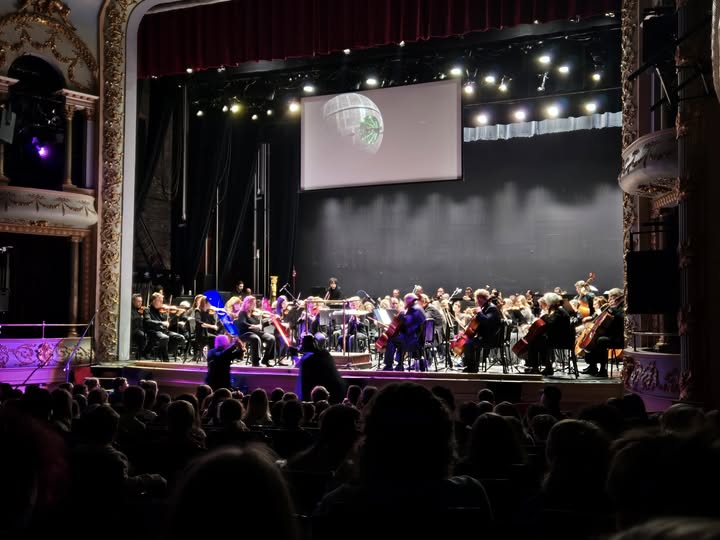
The Portsmouth Symphony Orchestra’s 29th season offers so much to anticipate—including three Main Stage performances, two Family Holiday Pops! concerts, and the return of our Family Matinees and chamber music series. We are especially thrilled to open the season on September 20 with internationally acclaimed violinist Joshua Bell, presented as part of our Guest Artist Series. This series is made possible by the Performing Guest Artist Fund, established in January 2025 through the generosity of Dr. Clinton Frederick Miller II and Laurel Miller.
This season’s Main Stage concerts invite audiences to travel through the cosmos, experience the connections between music and visual art, and explore timeless stories of love and loss. We are also delighted to continue our chamber music series at Christ Church Episcopal in Exeter, bringing audiences closer to our musicians through intimate performances.
Last season set a high-water mark for artistry, with ambitious and unforgettable performances under the baton of Music Director John Page. Beyond the concert stage, the generosity of our supporters allowed us to deepen our educational and community programming—from free small-ensemble visits in local schools to the return of our Explore + Learn concert at The Music Hall, which welcomed approximately 1,600 students.
Each season, the PSO relies on the collective support of our corporate sponsors, individual donors, foundations, community partners, and, of course, you—our audience.
Every performance begins with an invitation: to gather, to listen, and to experience something that can only happen when musicians and audiences share the same room. We are delighted to share this new season with you and look forward to all that we will discover together.
David Young
President of the Board of Directors
Message from the Music Director
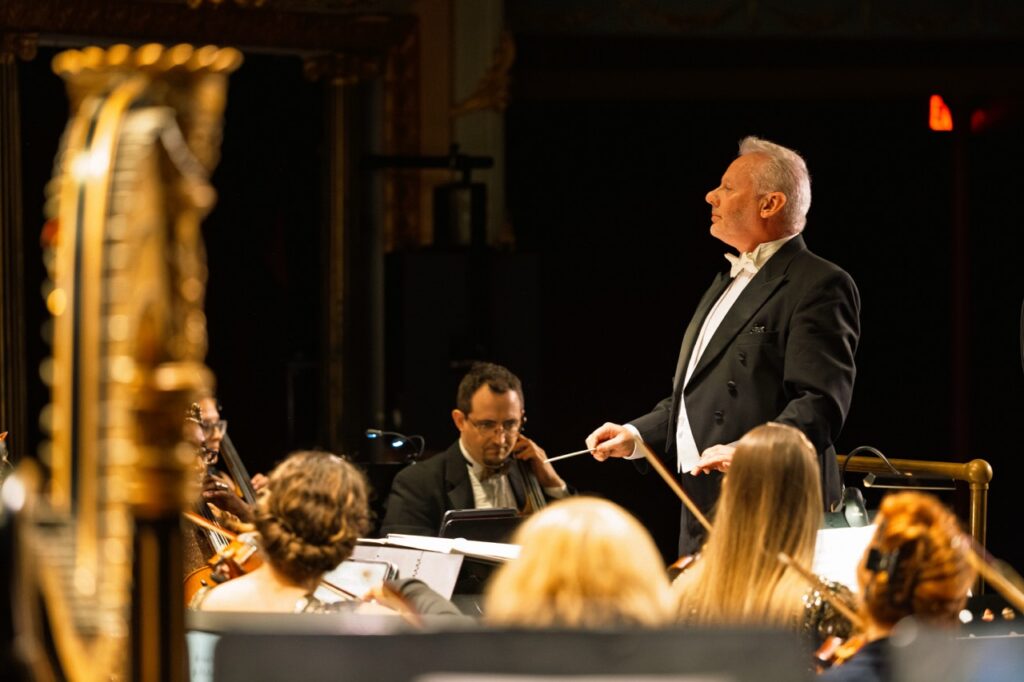
It’s hard to believe that only 15 years ago I became a part of this community. What began as a new artistic partnership has grown into something far more meaningful—a shared journey with audiences, musicians, students, and colleagues across the Seacoast who have continually reminded me why this work matters.
As I reflect on these 15 years, I’m struck less by what has changed and more by what has remained constant: the belief that music belongs to everyone, and that an orchestra can be both artistically ambitious and deeply rooted in its community.
For the 2026—2027 season, we are building on that foundation in a very intentional way: by focusing on audience growth—inviting more people into the concert hall, lowering barriers to entry, and creating multiple pathways into the orchestral experience.
We open in September at The Music Hall with violinist Joshua Bell, setting the tone for a season designed to welcome new audiences while engaging longtime supporters.
In November, we turn to the imagination with a space-themed program that blends music, science, and storytelling in an immersive exploration of the cosmos. December’s Family Holiday Pops! continues as one of our most accessible and joyful traditions, bringing generations together through shared experience.
In March, we explore music inspired by visual art, and we close the season in the spring with Tchaikovsky’s Romeo and Juliet, a program centered on love and loss and the full emotional range of orchestral music, alongside the next Young Artist Competition winner.
In addition to our Main Stage concerts, our educational and community programs remain central to our mission. Through school visits, chamber ensembles, the Explore + Learn School Day Series with The Music Hall, and Family Matinees at the Portsmouth Public Library, we continue working to ensure that live orchestral music is widely shared and accessible.
I look forward to continuing this work together in the season ahead,
John Page
Music Director
Program Listing
Suite from “Close Encounters of the Third Kind” | John Williams | ||
Sinfonia (for orbiting spheres) | Missy Mazzoli | ||
—Intermission— | |||
The Planets
| Gustav Holst | ||
Musicians
Violin I
- Nicole Wendl,
Concertmaster
The Mulhern & Scott Chair - Karl Ørvik
Assoc. Concertmaster - Megan Fedor
- Aspen Barker
- Onur Dilisen
- Eya Setsu
- Faith Hofma
- Caterina Yetto
- Jill Good
- Louise Kandle
- Rachel Swanson
- Lorna Ellis
Violin II
- Ashley Offret*
- Susan Streiff**
- Ashley Freeman
- Jackie Bensen
- Skye Darling
- Abigail Sykes
- Susan Holcomb
- Diana Bourns
- Jeffrey Sullivan
- Kristin Sullivan
Viola
- Julia McLean*
- Karen McConomy**
- Wendy Keyes
- Mary Gallant
- Jan Heirtzler
- Kathryn Pappalardo
- Maggie Chutter
- Thalia Dain
Cello
- Gary Hodges*
- John Acosta**
- Eli Kaynor
- Molly Goldstein
- Zach Larson
- Fay Rubin
- Lauren Wool
- Melissa Ambrose
Double Bass
- Moises Carrasco*
- Volker Nahrmann
- Joe Annicchiarico
- Nicolette Kindred
- Nate Therrien
Flute
- Aubrie Dionne*
- Nicole Paquette
- Erin Dubois
- Rosemarie Hinkle
Piccolo
- Erin Dubois
- Rosemarie Hinkle
- Nicole Paquette
Alto Flute
- Rosemarie Hinkle
Oboe
- Sarah Krebs*
- Amanda Doiron
- Izumi Sakamoto
- Jill Hoffmann
English Horn
- Jill Hoffmann
Clarinet
- John Ferraro* The Bryan Freedman Chair
- Santiago Baena Florez
- David Young
- Katrina Veno
Bass Clarinet
- Katrina Veno
Bassoon
- Melissa Grady*
- Nick Pitcher
- Rebecca Whittier
Contrabassoon
- Jovi Altadonna
Horn
- Orlando Pandolfi* The Ron Gregoire Chair
- Kathleen Keen
- Susan Williams
- Laura Chicarello
- Gray Ferris
- Brianna Kirkland
- Jocelyn Crawford Carr
Trumpet
- Adam Gallant*
- Mark Zielinski
- David Shepherd
- Greg Bechtold
Trombone
- Brandon Newbould*
- Ben Sink
- Katie Schraeder
Bass Trombone
- Phil Hyman
Tenor Tuba/Euphonium
- Katie Schraeder
Tuba
- Crystal Metric*
Timpani
- Steve Cirillo*
- Timur Rubinshteyn*
Percussion
- Mike Williams
- Alyssa Ostrowski
- Michael Shun
- Colin Ward
Harp
- Sorana Scarlat*
- Lauren Hemerlein
Celesta
- Jackson Carruthers
Organ
- Seth Hurd
Perform with the PSO
The Portsmouth Symphony Orchestra seeks classical musicians in the community to audition for a place in the orchestra.
We invite all musicians, from professionals and educators to devoted amateurs and highly accomplished students, to audition for a place in the orchestra. We are actively seeking experienced string players.
Program Notes
Suite from "Close Encounters of the Third Kind"
John Williams
As “Johnny” Williams, John Williams served a Hollywood apprenticeship as a pianist/conductor. But after much television work and original scoring for lighter fare such as Diamond Head and Gidget Goes to Rome (both 1963) and a disaster cycle including Earthquake and The Towering Inferno (both 1974), Williams became one of the most adulated and analyzed composers in Hollywood history with three major blockbusters: Jaws (1975), Star Wars, and Close Encounters of the Third Kind (both 1977).
While Star Wars is well-known for its retro symphonic mode, Close Encounters posits a more complex musical structure. Music is presented as the key to communication between humans and benign aliens. A five-note motif serves as this non-verbal link and appears in various guises throughout both plot and score. At times, complex Ligeti/Penderecki-influenced sonorities represent the mysterious aspects of the visitors and underscore some of the more threatening moments (such as an eerie abduction of a child). But by the spectacular mothership finale the “alien” atonalities meld into (literally) uplifting lyricism that serves aptly as the climax of one of the most transcendent sequences encountered in films of any period.
—From the Los Angeles Philharmonic archive
Sinfonia (for orbiting spheres)
Missy Mazzoli
Composer Note:
Sinfonia (for Orbiting Spheres) is music in the shape of a solar system, a collection of rococo loops that twist around each other within a larger orbit. The word “sinfonia” refers to baroque works for chamber orchestra but also to the old Italian term for a hurdy-gurdy, a medieval stringed instrument with constant, wheezing drones that are cranked out under melodies played on an attached keyboard. It’s a piece that churns and roils, that inches close to the listener only to leap away at breakneck speed, in the process transforming the ensemble turns into a makeshift hurdy-gurdy, flung recklessly into space. Sinfonia (for Orbiting Spheres) was commissioned by the Los Angeles Philharmonic and later expanded for a concert with the Boulder Philharmonic.
— Missy Mazzoli
The Planets Op. 32, H. 125
Gustav Holst
Gustav Holst is one of England’s most revered composers, creator of musical works in great variety: choral music, songs, band music, orchestral works, ballet, and more. His musical purview was remarkably diverse, and his compositions are frequently performed and appreciated in Great Britain. His popularity there bears comparison with his good friend and follow composer, Ralph Vaughan Williams. In this country the matter is somewhat different. His reputation rests largely, and solidly, upon his two immortal works for band, Suites No. 1 and No. 2 for Military Band. It is hard, indeed, to participate in American public school music band programs without having performed one or both of these classics. They simply stand at the top of the repertoire for band, and almost every American band student knows them well. On the other hand, however, those who frequent professional orchestra concerts in this country largely know Holst through his most popular orchestral work, The Planets.
Born of Scandinavian descent in rural England to a musical, middle-class family, Holst received a musical education early, playing the violin and piano, and later taking up the trombone, the mastery of which his father thought would help his asthma. Holst worked for a while as village organist and choirmaster before attending the Royal College of Music, where he met his life-long friend Vaughan Williams. He eventually focused on the trombone, and earned a modest living early on as a member of various orchestras. He soon gave that life up, however, and spent the rest of his life teaching music in private girls’ schools.
The musical life of Great Britain in those days was strongly influenced by a new appreciation and re-examination of the native musical treasures of the sixteenth and seventeenth centuries, as well as a fascination with traditional English folk tunes—these influences were significant in the lives of both composers. Of course, he was well aware of the major compositions of contemporary composers like Stravinsky, Schoenberg, Ravel, and Richard Strauss, and these figured in his artistic development, as well. Two rather unusual, but important influences in his life and works were Hindu religion and philosophy, and astrology. His abiding interest in Hindu texts began early in the century, leading him to engage in the formal study of Sanskrit–translating the texts for himself–and to compose several of his important works on those texts, including two operas. His association with astrology began during a trip to Spain in 1912, when a friend of his inspired the interest, and Holst maintained an interest in the subject—reading fortunes along the way–for the rest of his life.
It is that interest in astrology—not astronomy—that is central to his composition of The Planets. Holst began the work about 1913, gradually completing it by 1917. The first performance was given privately in 1918, and word of mouth raised public expectations for the first public performance in 1920. Originally entitled Seven Pieces for Large Orchestra, the suite suggests to many his familiarity with Schoenberg’s similar use of the phrase. Others see inspiration derived from Mussorgsky’s Pictures at an Exhibition or Elgar’s Enigma Variations. Holst’s pictorialism is less specific than these antecedents, but spectacularly vivid, nonetheless. Indeed, composed for a large orchestra—remember, large—and perhaps more importantly—varied orchestras were all the rage in the late romantic era, with the orchestras of Richard Strauss, Mahler, and Stravinsky, among others, as models. In addition to the usual full orchestra, Holst’s score calls for woodwinds in fours–including at times, alto flute, two piccolos, and the (really) rare bass oboe. The brass section features six horns, four trumpets, and, in addition to the standard bass tuba, a smaller, tenor tuba. There’s an organ and a celesta, and for the final movement, a wordless women’s chorus—à la Debussy.
The order and number of the seven movements has generated much discussion with regard to the actual planets and their number and position. It’s all really irrelevant, for Holst’s work has to do with the astrological signs—of which there are seven–and not with how we define what planets are, or their respective positions with relation to the sun, even what conditions may or may not be on them. So, the order of movements, beginning with Mars, stems from the astrological succession.
Holst chose the relatively unusual time signature of five-four time for this ominous evocation of war, beginning with a hypnotic rhythm, repeated over and over, as chords constantly grow and threaten, until they are practically howling. Following a reiteration of the driving, repeated rhythm in the strings, the rarely used small, or tenor tuba, is featured along the trumpets in punchy fanfares. This is the original Darth Vader and the Death Star music! The dreary, desolate landscape of destruction in war is admirably depicted in a bleak, slower middle section before a repeat of the opening hammering material. This gripping—no glory here!–evocation of war ends with dramatic, blunt hammer strokes, separated by pauses that leaves no doubt of the utter destruction and obliteration of war.
Venus, bringer of peace, answers a call from the solo horn, and we are ushered into a tranquil world aptly evocative of the Roman goddess of love and beauty, astrologically associated with harmony and balance. A gentle succession of woodwind passages and lush string sonorities, enhanced by the exotic sound of the celesta create a marvelous respite from Mars. Holst’s familiarity and obvious respect for the music of Debussy seems clear, here in this floating serenity. Although, it must be said, the solo cello sounds suspiciously like some passages in compositions of Holst’s best friend, Vaughan Williams.
Mercury zips by next, in a quicksilver movement befitting the winged messenger of the gods. In astrology, Mercury also is the symbol of rationality and mentality. Cascades of scales and twittering rhythms carry thought along like lightening. The magic celesta part is reminiscent of Richard Strauss’ Rosenkavalier, and our ubiquitous cell phone beeps, as well.
Another quick movement follows, this time a tribute to Jupiter, the “bringer of jollity.” Jupiter was considered the ruler of the gods, and the planet, Jupiter, ruler of all the other planets. Merrymaking and gambling play a part in his personality, as well, and the latter aspect comes into play in the jaunty opening tunes, one zippy and syncopated, and the other a rather thumping waltz. But in the middle, we are treated to a noble and exalting tune as only the Edwardians can compose—definitely fit for a king (of some kind). It’s a glorious melody that came to be adapted later by Holst as a church hymn, to the text, “I Vow to My Country,” and is sung and revered in Great Britain. The raffish tunes return, and the movement ends.
Saturn, the “Bringer of Old Age” is ushered slowly in by two cold, cold static woodwind chords, endlessly repeated. After some ominous string comments, the brass intone a stately procession. In astrology Saturn is the founder of social order and civilizations, charged with duty, responsibility, and discipline. The brass evidently carry this duty heavily as they plod to a climax, gradually subsiding into a dissolution borne by the strings and oscillating woodwinds that floats timelessly and without emotion into an apparent infinity.
Four imposing notes slowly and loudly announced by the brass are the motif of “Uranus the Magician.” They return throughout the movement in a remarkable variety of guises. But, the movement proper is a stomping, tramping march dedicated to the guardian of genius and discovery, and associated with sudden and unexpected changes. The march is somewhat redolent of any number of French antecedents—those of Delibes and Dukas, or even Berlioz may come to mind. The bassoon trio sets us off on this little rollicking affair—interrupted from time to time by those four identifying notes. The orchestra builds the march almost out of control, only to subside. The four-note motto is heard again in soft, pizzicato notes in the harp. The bassoons make a half-hearted attempt to resume the march, but fail. The brass loudly play the motto again, and finally harp and strings end this enigmatic paean to the clever “Magician.”
The remarkable fact of the last movement, “Neptune the Mystic” is simply that it was composed almost one hundred years ago. In it Holst dispenses with so many of the rational and organizing principles of music and wonderfully creates an atmosphere of not only the mystic, but also of the traditional characteristics associated with the planet Neptune: illusion, confusion, and deception. Meter (yes, it is the same five-four of the first movement—but can you easily hear it, really?), chord “progressions,” melodies, form, shape—all play minimal to non-existent roles, here at the end. Rather, the composer uses exotic successions of harmonies and fragments of non-traditional scales to create the floating sound that envelops us. Imaginative orchestration in the great tradition of Rimsky-Korsakov, Stravinsky, and Debussy clearly affirms Holst’s mastery. This is truly “space music” long before the advent of the clichés with which we are all familiar. As the orchestra gradually fades into nothingness, only the wordless women’s chorus (he had used it in an earlier work) is left, gradually vanishing from our hearing. It is the only truly human element that stays with us as the composer’s exploration of our humanity writ in the heavens fades. The conceit is that perhaps–they don’t end.
–Wm. E. Runyan
Keep the music playing!
When you support the Portsmouth Symphony Orchestra, you are helping musicians take the stage while also enriching the Seacoast’s cultural life, bringing high-quality, affordable classical music to your neighbors, and inspiring the next generation of music lovers—ensuring that the music endures.
Thank you for being part of the PSO community of supporters and for helping us to keep the music alive on the Seacoast!
Donors
- Ann Theodore Foundation
- Clinton F. Miller II, MD & Laurel Ann Miller
- Donna Saunders & Michael Chubrich
- Jameson & Priscilla French
- Jude Blake & Mike Bailey
- Mulhern & Scott, PLLC
- Philip P. Dunphy
- Ronald Gregoire
- The Sandy Beach Fund
- Springer’s Jewelers
- Bangor Savings Bank Foundation
- Barbara Henry & Nancy Winkley
- Carolyn McConomy
- David & Sarah Young
- Eric Macdonald
- Lou & Kris Beaudette
- Margot Doering
- New Hampshire Charitable Foundation’s Christos Papoutsy Art Ventures Fund
- New Hampshire Charitable Foundation’s
Geoffrey E. Clark and Martha Fuller
Clark Fund - Stephen Gaykan
- Barbara Sweet
- Chris & Mimi Brett
- Jeffrey & Penelope Gilbert
- Jessica McKeon
- Karen Furtado & Mary Sargent
- Paul & Janice Lanzoni
- Stuart Singer
- The Allayne & Douglas Wick Foundation
- Anthony McManus
- Elizabeth Jefferson
- Diana & Sam Bourns
- Fay Rubin
- Ivor Freeman
- JD & Tara Sherman
- Karen McDonnell & Sam Smoot
- Katherine Wells Wheeler
- Lorraine Raleigh
- Lorraine T. Keazer
- Lucinda Spaney
- M. Christine Dwyer & Michael Huxtable
- Medioli Family
- Mrs. Roger M. Doering
- Robert & Cyndi Bear
- Sherman Family Giving Fund
- Steve Cirillo
- Thomas Harford
- William and Linda Ceruzzi
- William Mathers
- William Quirk & Jean Berube
- A Fabulous Find
- Albert Lantinen
- Anonymous
- Anonymous
- Beverly Reynolds Giblin
- Bruce Briggs & Katherine Kramer-Briggs
- Carol Seely
- Christopher Sturr & Patrick Carey
- Craig & Shirley Peverly
- Digital Prospectors
- Elizabeth Connell Nielsen & Devan Nielsen
- Jeanne & Derek Stern
- Joann Rohde
- John Page
- Joseph Stieglitz
- Kevin Bergesen & Laura Horton
- Lester Hochberg
- Martha Thyng
- Margaret R. Reeves
- Michael & Glicka Kaplan
- Mr.& Mrs. Bruce Johnson
- Parma Recordings, LLC
- Priscilla Bellairs
- Susanne Veal
- Tim Hanson
- W Timothy MacDonald
- Walmart/Sam’s Club Spark Good
- Andre Vanderzanden, MD
- Andrea Guidoboni
- Andrea Hammond
- Andrea Sullivan
- Andrew Bagley
- Anonymous
- Anonymous
- Anonymous
- Anthony Codding
- Aubrie Dionne
- Barbara & Robert Schultz
- Beverly Bruce
- Brian Fitzgerald
- Bruce Valley
- Caleb DeVries
- Catherine Anderson
- Cynthia and Michael Harvell
- David & Marion Ellis
- David & Eleonore Sanderson
- David & Wendy Keyes
- David Lyon
- David Pope
- Deanna Armstrong
- Diane Schaefer
- Edward Mallon
- Elisabeth Haynes
- Eric James Salas
- Evelyn Laux
- Gail J. Lewis
- Gary Hodges
- Geraldine Gerbereux
- Gerry Weidema
- James Willcox
- Jan & David Heirtzler
- Jane Mallinson
- Janet Day
- Janice Williams
- Jo Ann B. Price
- Joel E. Johnson
- John & Susan Herney
- Joyce & Donald Marchand
- Joyce Marinace
- Judith Miller
- Kathleen Tutone
- Keith Lauder
- Kelly Mee
- Kristin Sullivan
- Larry Harris
- Lauren Jacoby
- Lawrence & Linda Ardito
- Linda Cunningham
- Lindsey Humes
- Louis F. Clarizio, DDS
- Meredith Elvidge
- Michael Thiel
- Nancy Braese
- Nancy Gallant
- Nancy Zadravec
- New Hampshire Charitable Foundation’s
David and Kathleen Rushford Murray
Charitable Fund - Nicole Bodoh
- Patricia Nicolino
- Patrick and Judy Parks
- Paul Pelletier
- Peter Svahn
- Randall Mason
- Resmiye Oral
- Richard & Anne Foley
- Rick Stanton
- Rinda Madden
- Robert Bartley
- Robert K. Gray Jr.
- Robyn Aldo
- Sally Crawford & Peter Wells
- Sally & Alan Gayer
- Sarah Veale
- Sherrill Nixon
- Steven Goldberg
- Susan Martore-Baker
- Sylvia Russell
- Thalia Dain
- Vicki Geis
- Vicki Hill
- Victor Bilodeau
- Wayne Shirley
- Wendy Keyes
- Zoi and John Diamond
- Adam & Mary Gallant
- Alan Calhoun
- Alessandro Levi Montalcini
- Allison Field
- Amira Zornic
- Amy Barry
- Amy Ruell
- Andrea Stevenson
- Andrew Jaffe
- Anna Boudreau
- Anna Howard
- Anonymous
- Anonymous
- Anonymous
- Anonymous
- Anonymous
- Anonymous
- Anonymous
- Antonia D’Agostino
- Averil Svahn
- Barbara Turk
- Barry McArdle
- Becky Kates
- Bennett Shriver
- bess4sahara
- Bette Garrett
- Bob Richardson
- Brad Dumke
- Brenda Jardine
- Brian Putnam
- Brian St.Hilaire
- Brian Turnball
- Bridget Stearns
- Bronson de Stadler
- Bruce Gordon
- BRYAN BUCHANAN
- Carol Cameron-Sears
- Carol Ehlen
- Caroline & Nate Piper
- Caroline McElroy
- Carolyn Vinica
- Catherine Cacas
- Catherine Mulligan
- Charles Case
- Cheri Bach
- Cheryl Laughlin
- Chris Gantner
- Christiana Dadamo
- Christina Strunk
- Christine Moon
- Claire Durgin
- Cliff Mommsen
- Cocheco Charitable Fund
- Colin Simpson
- Colin Ward
- Colleen Stuart
- Crystal Metric
- Cynthia & Jeffrey Knapp
- Cynthia Bajdek
- Dana Beauvais
- David A. Taylor
- David Hirsch
- David Mahoney
- Deena Fullwood
- Diana Fainberg
- Diane E Erwin
- Diane Robinson
- Diane Zaidlicz
- Dianna Ferreira
- Don & Mary Jo Briselden
- Donlyn Ray
- Edward & Angelynne Hinson
- Edward & Janet Caylor
- Edward Mehigen
- Edwin Charle
- Elaine & Steven Molleur
- Elizabeth Chilton
- Elizabeth Gale Lyon
- Elizabeth Gilbert
- Elizabeth Mooney
- Elizabeth Schwartz
- Ellen Morton-Hamil
- Elliott Baker
- Eric Francis
- Erin Dubois
- Frances Ann Houlihan
- Francine Dupont
- Francoise Elise
- Frank Getman
- Frank Snyder
- Fred & Barbara Engelbach
- Gail D Richard
- Gail Hill
- Gary Fincke
- Gary McGath
- Georgia Flood
- Gitry Heydebrand
- Glenda & Ed Fischer
- Gonghu Li
- Gregory Andruschkevich
- Helen Taft
- Henzi Ernest
- James Abbott
- James Joyce
- James Scott
- James Shanley
- Jane Bagnell
- Jane Greenslit
- Jane Newman
- Jane Shartzer
- Jane Steiner
- Janice Belmont
- Jaqueline Ellis
- Jeannette Webb
- Jennifer Searl Como
- Jo Ellen Thomas
- Jo Haskell
- Joan Jacobs
- Joan Pratt
- Joan Widmer
- Joanne Mcgrath
- Jodi Offret
- John A Ferraro JR
- Joseph Fellows
- Joseph Romatelli
- Josephine Will
- Joy Cohen
- Judi Barba
- Judith Goodwin
- Judith Howard & David Meikle
- Judith N Moyer
- Julie Boudries
- Justin Wright
- Kara Stuhr
- Karen Battles
- Karen Mason
- Kari Vainio
- Kathleen D Rockwood
- Kathleen D’Abre
- Kathryn LaPlante
- Kathryn Theall
- Kathy and Dennis Donovan
- Kelly Butterfield
- Kenneth Clark
- Kenneth Fuld
- Kerry Fernandes
- krisna Pintarelli
- Larry Drake & Joan Jacobs
- Lauren Wool and Jeff
- Bower
- Lee Hoogeveen
- Leila Deurell
- Leisa Thompson
- Leslie K Mast
- Linda Anderson
- Linda Harville
- Linda McLennan
- Lisa Todaro
- Liz Mooney
- Louise Hirschberg
- Lynn DiElsi
- M. Janine Quinn & David Frolio
- Madeleine Johnson
- Magaret Sofio
- Mara Witzling & Peter Cass
- Marc Lessard
- Marcia Peverly
- Margaret Carol Dreyfus
- Maria Batas
- Marielle Kaifer
- Mark DiPerri
- Mark Kayan
- Martha Caswell
- Martha E Stone
- Marvin & Cynthia LeRoy
- Mary and Donald Skwar
- Mary Beth McIntyre
- Maureen Barbieri
- Maureen Nolan
- Megan Fedor
- Michael Shun
- Michele Bonner
- Michele Rhoten
- Michelle Flynn
- Mike Berube
- Mike McGrail
- Monte Bohanan
- Mr & Mrs Richard F Topping
- Nancy Jackson
- Nicholas and Lea Aeschliman
- Nicholas Crevier
- Owen Tinti-Kane
- Pamela Shaw
- Patricia Bannan
- Patricia Lundgren
- Paula Rais
- Peggy Vagts and Mark Miller
- Peter Bowman
- Peter Grulke
- Peter Humphery
- Peter Taylor & Linda Westinghouse
- Peter Thomas
- Phyllis Breitman
- Phyllis Mackey
- phyllis stibler
- R E Sandler
- Rachel Swanson
- Rebecca Beaulieu
- Regina Tate
- Richard Barrow
- Richard Bechtold
- Richard Bossard
- Richard David Grossman
- Richard Mechaber
- Richard Meyer
- Richard Naimark
- Robert and Elaine Ryan
- Robert Johnson
- Robert McCunney
- Robert Rivera
- Robert Slein Jr
- Robert Westerberg
- Roger Crim
- Ronald & Lois Laurence
- Roy William Helsel
- Russell Grazier
- Ryan Nelson
- Sally Baybutt
- Sally Morris
- Sandra Quinlan
- Sarah Krebs
- Sarah Quade
- Seth A Hurd
- Shannon Goldknopf
- Sharon Rice
- Sharon Valashinas
- Shelley Wieler
- Simeon Howard
- Simon Basner
- Stan Duncan
- Stephanie Savastano
- Stephenie Merrill
- Steven Cole
- Steven Goddard
- Steven Lewis
- Sue Megan
- Susan Forti
- Susan Nastasi
- Susan Peterson
- Susan von Hemert
- Suzanne Foley
- Teresa Melnik
- The Red Door Pottery Studio
- The Tracy-Brightman Revocable Trust
- Tom Mulvoy
- Vic Lachance
- Vinny Barba
- Wendy Blackman
- Wilfred Jack Sanders
- William Griswold
- William O’Brien
- Yvette Howe
- Yvonne Chainey
Board of Directors
- David Young, President
- James Mulhern, Vice President
- Susan Martore-Baker, Treasurer
- Jan Heirtzler, Secretary
- Caleb DeVries
- Melissa Grady
- Paul Lanzoni
- Eric Salas
- Donna Saunders
- Rachel Swanson
Staff & Volunteers
- Erin Dubois, General Manager
- Aubrie Dionne, Director of Outreach
- Adam Gallant, Musician Coordinator
- Caroline Amport Piper, Director of Communications
- Jan Heirtzler, Librarian
- Graphic Details, Graphic Design
- Paul Lanzoni, Development Committee Chair
- Rachel Swanson, Marketing Committee Chair
- James Mulhern, Nomination and Governance Committee Chair
- Eric Salas, Orchestra Committee Chair