Experience the remarkable color and versatility of winds and piano with the PSO Principal Winds. The program spans vibrant contemporary works and lush Romanticism. Valerie Coleman’s spirited Umoja celebrates unity through joyful rhythms and musical conversation, while Alyssa Morris’s Konza Parable traces the renewal of the Kansas prairie through three evocative movements: “Burn,” “Ashes,” and “Growth.” The program concludes with Ludwig Thuille’s sweeping Sextet in B-flat Major, a richly expressive work filled with soaring melodies, intricate interplay, and late-Romantic warmth. These works explore connection, transformation, and the power of music to bring distinct voices into harmony.
The Artists
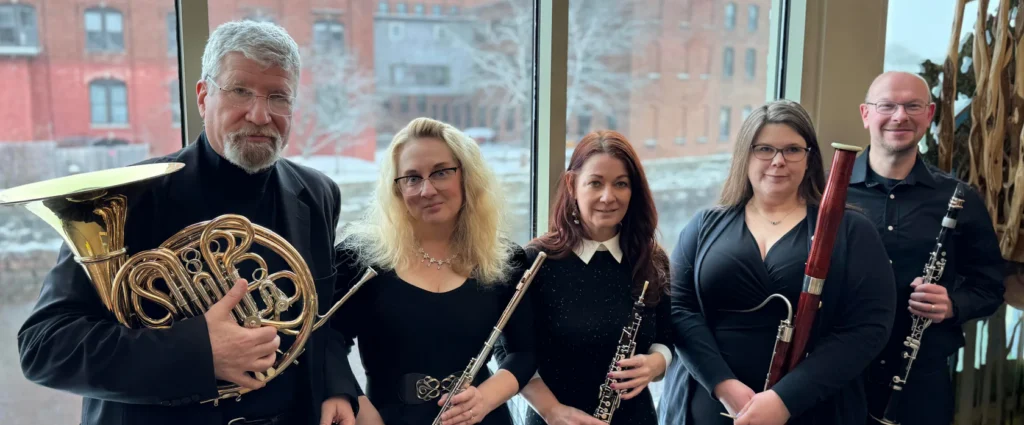
PSO Principal Winds
Aubrie Dionne, flute Sarah Krebs, oboe John Ferraro, clarinet Melissa Grady, bassoon Orlando Pandolfi, horn
Tianhong Yang, piano
What Makes This Concert Special?
Valerie Coleman is a flutist as well as a composer and was the founder of the Grammy-nominated Imani Winds. Umoja began as a simple song for women’s choir before Coleman arranged it for Imani Winds, and it became one of the ensemble’s signature pieces. “Umoja” means “unity” in Swahili, and the music creates that feeling through call-and-response, syncopated rhythms, and a melody passed among the players.
Alyssa Morris is both an oboist and composer, giving her an intimate understanding of how wind instruments speak, blend, and interact. Konza Parable was inspired by the controlled burning of the Konza Prairie in Kansas. Its three movements—“Burn,” “Ashes,” and “Growth”—follow the landscape through destruction and renewal. Prairie fires may appear devastating, but they are essential to the health and regeneration of the tallgrass ecosystem.
Ludwig Thuille was a close lifelong friend of Richard Strauss, who admired the Sextet and helped arrange its premiere. Although Thuille was an influential composer and teacher in his lifetime, much of his music has since fallen out of the standard repertoire. Written in 1888, the Sextet is his best-known work and combines the warmth and sweep of late-Romantic music with the individual personalities of the winds. Listen especially for the prominent horn writing and the way the piano sometimes supports the winds and sometimes becomes an equal dramatic partner.