Message from the President
The Portsmouth Symphony Orchestra’s 29th season offers so much to anticipate—including three Main Stage performances, two Family Holiday Pops! concerts, and the return of our Family Matinees and chamber music series. We are especially thrilled to open the season on September 20 with internationally acclaimed violinist Joshua Bell, presented as part of our Guest Artist Series. This series is made possible by the Performing Guest Artist Fund, established in January 2025 through the generosity of Dr. Clinton Frederick Miller II and Laurel Miller.
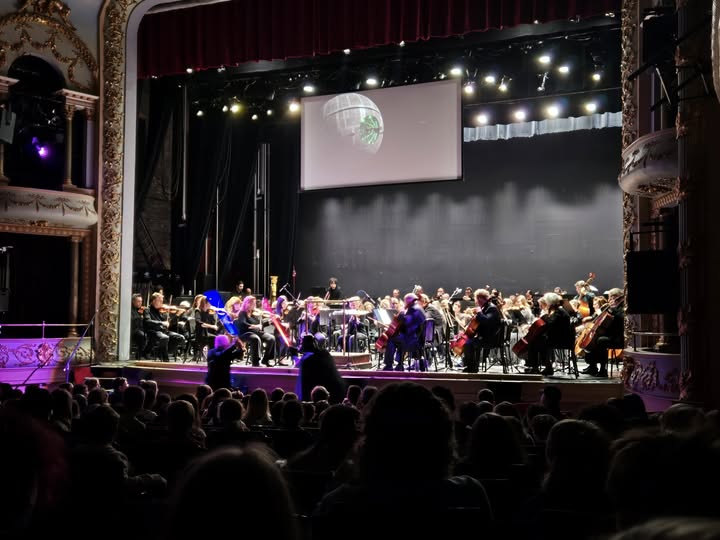
This season’s Main Stage concerts invite audiences to travel through the cosmos, experience the connections between music and visual art, and explore timeless stories of love and loss. We are also delighted to continue our chamber music series at Christ Church Episcopal in Exeter, bringing audiences closer to our musicians through intimate performances.
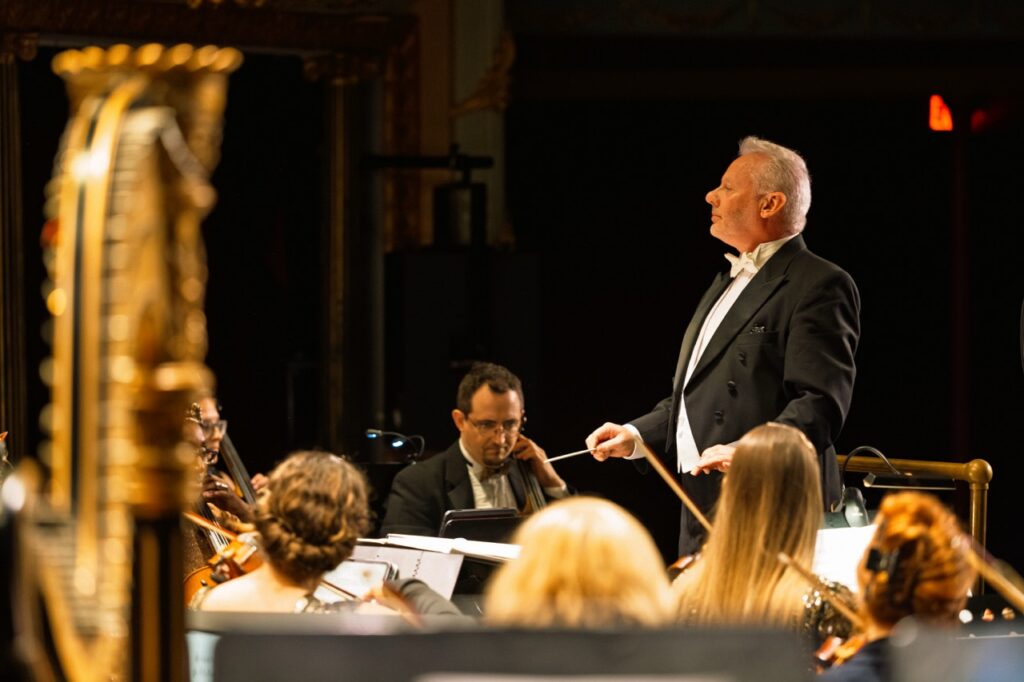
Last season set a high-water mark for artistry, with ambitious and unforgettable performances under the baton of Music Director John Page. Beyond the concert stage, the generosity of our supporters allowed us to deepen our educational and community programming—from free small-ensemble visits in local schools to the return of our Explore + Learn concert at The Music Hall, which welcomed approximately 1,600 students.
Each season, the PSO relies on the collective support of our corporate sponsors, individual donors, foundations, community partners, and, of course, you—our audience.
Every performance begins with an invitation: to gather, to listen, and to experience something that can only happen when musicians and audiences share the same room. We are delighted to share this new season with you and look forward to all that we will discover together.
David Young
President of the Board of Directors
Message from the Music Director
It’s hard to believe that only 15 years ago I became a part of this community. What began as a new artistic partnership has grown into something far more meaningful—a shared journey with audiences, musicians, students, and colleagues across the Seacoast who have continually reminded me why this work matters.
As I reflect on these 15 years, I’m struck less by what has changed and more by what has remained constant: the belief that music belongs to everyone, and that an orchestra can be both artistically ambitious and deeply rooted in its community.
For the 2026—2027 season, we are building on that foundation in a very intentional way: by focusing on audience growth—inviting more people into the concert hall, lowering barriers to entry, and creating multiple pathways into the orchestral experience.
We open in September at The Music Hall with violinist Joshua Bell, setting the tone for a season designed to welcome new audiences while engaging longtime supporters.
In November, we turn to the imagination with a space-themed program that blends music, science, and storytelling in an immersive exploration of the cosmos. December’s Family Holiday Pops! continues as one of our most accessible and joyful traditions, bringing generations together through shared experience.
In March, we explore music inspired by visual art, and we close the season in the spring with Tchaikovsky’s Romeo and Juliet, a program centered on love and loss and the full emotional range of orchestral music, alongside the next Young Artist Competition winner.
In addition to our Main Stage concerts, our educational and community programs remain central to our mission. Through school visits, chamber ensembles, the Explore + Learn School Day Series with The Music Hall, and Family Matinees at the Portsmouth Public Library, we continue working to ensure that live orchestral music is widely shared and accessible.
I look forward to continuing this work together in the season ahead,
John Page
Music Director
Program Listing
Symphony No. 7 op. 92, A major
| Ludwig van Beethoven | ||
—Intermission— | |||
Symphonie espagnole op. 21
Joshua Bell, violin | Édouard Lalo | ||
Artist Biography
Joshua Bell, violin
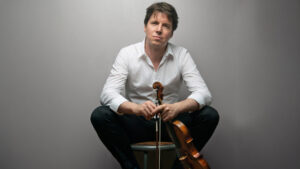
With a career spanning almost four decades, Grammy Award-winning violinist Joshua Bell is one of the most celebrated artists of our time. He has performed with virtually every major orchestra in the world, and regularly appears as a soloist, recitalist, chamber musician, conductor, and as the Music Director of London’s Academy of St Martin in the Fields (ASMF).
In the 2025-26 season, Bell continues to champion the rediscovered Violin Concerto by Thomas de Hartmann, following his recent Diapason D’Or-winning world premiere recording of the work. After giving its UK premiere at London’s BBC Proms, he gives the concerto’s North American premiere with the New York Philharmonic, performs it with the Boston Symphony and Oslo Philharmonic, and gives its Canadian premiere during his season-long tenure as a Toronto Symphony Spotlight Artist. With ASMF, he leads extensive tours on both sides of the Atlantic, including returns to the Vienna Konzerthaus and New York’s Carnegie Hall. Other orchestral highlights include his first appearances as Principal Guest Conductor of the New Jersey Symphony; concerto dates with the Houston Symphony, Oregon Symphony, Baltimore Symphony, Naples Philharmonic, and Ottawa’s National Arts Centre Orchestra; and concerts and an Asian tour with Hamburg’s NDR Elbphilharmonie Orchestra. As well as giving recitals in the U.S. and Europe, Bell joins Steven Isserlis and Evgeny Kissin for trio programs in New York, Kansas City, Paris, Vienna, and Prague, and reunites with Jeremy Denk for duo recitals at Walt Disney Concert Hall and the Ravinia Festival.
In 2011, Bell was named Music Director of the Academy of St Martin in the Fields, succeeding Sir Neville Marriner, who founded the orchestra in 1959. Bell’s history with the Academy dates back to 1986, when he first recorded the Bruch and Mendelssohn concertos with Marriner and the orchestra. Bell has since led the orchestra on several albums, including the 2019 Grammy- nominated Bruch: Scottish Fantasy. In April 2024, the Academy announced the extension of his contract through the 2027-28 season. Bell is also the Founder and Music Director of the Chamber Orchestra of America (COA), which aims to empower the next generation of artists through performance opportunities, mentorship, and educational outreach initiatives. In April 2025, COA made its debut at TED2025, where Bell gave a TED Talk about the power of live orchestras in today’s tech-filled world.
Bell has commissioned and premiered new works by John Corigliano, Edgar Meyer, Behzad Ranjbaran, and Nicholas Maw, winning a Grammy Award for his recording of Maw’s Violin Concerto. In 2023–24, he introduced his newly commissioned concerto project, The Elements, a five-movement suite by renowned living composers Jake Heggie, Jennifer Higdon, Edgar Meyer, Jessie Montgomery, and Kevin Puts. Bell gave the work’s premiere performances with Hamburg’s NDR Elbphilharmonie Orchestra and the Hong Kong Philharmonic, New York Philharmonic, Chicago Symphony, and Seattle Symphony.
Bell’s many collaborators include Emanuel Ax, Chris Botti, Chick Corea, Renée Fleming, Josh Groban, Lang Lang, Dave Matthews, Anoushka Shankar, Regina Spektor, Sting, and Daniil Trifonov.

Musicians
Violin I
- Zoia Bologovsky,
Concertmaster
The Mulhern & Scott Chair - Jeff Pearson
Assoc. Concertmaster - Megan Fedor
- Aspen Barker
- Olga Patramanska-Bell
- Faith Hofma
- Eya Setsu
- Onur Dilisen
- Caterina Yetto
- Paul Pinard
- Lorna Ellis
- Diana Bourns
Violin II
- Ashley Offret*
- Susan Streiff**
- Jessica Helie
- Susan Holcomb
- Jill Good
- Louise Kandle
- Jackie Bensen
- Skye Darling
- Rachel Swanson
- Abigail Sykes
- Jeffrey Sullivan
- Kristin Sullivan
Viola
- Theresa Jaques*
- Karen McConomy**
- Mary Gallant
- Wendy Keyes
- Ken Allen
- Jonathan Byrne
- Jan Heirtzler
- Maggie Chutter
- Eric Salas
- Thalia Dain
Cello
- Gary Hodges*
- John Acosta**
- Eli Kaynor
- Marshunda Smith
- Zach Larson
- Kurt Villiard
- Chloe Jaarsma
- Fay Rubin
- Lauren Wool
- Melissa Ambrose
Double Bass
- Caroline Samuels*
- Volker Nahrmann
- Joe Annicchiarico
- Bronek Suchanek
- Jason Noah Summerfield
Flute
- Aubrie Dionne*
- Brendan Ryan
Piccolo
- Erin Dubois
Oboe
- Sarah Krebs*
- Jill Hoffmann
Clarinet
- John Ferraro*
- Santiago Baena Florez
Bassoon
- Melissa Grady*
- Nick Pitcher
Horn
- Orlando Pandolfi*
- Gray Ferris
- Susan Williams
- Kathleen Keen
Trumpet
- Adam Gallant*
- Mark Zielinski
Trombone
- Brandon Newbould*
- Ben Sink
Bass Trombone
- Phil Hyman
Timpani
- Steve Cirillo*
Percussion
- Timur Rubinshteyn*
- Alyssa Ostrowski
Harp
- Sorana Scarlat
Perform with the PSO
The Portsmouth Symphony Orchestra seeks classical musicians in the community to audition for a place in the orchestra.
We invite all musicians, from professionals and educators to devoted amateurs and highly accomplished students, to audition for a place in the orchestra. We are actively seeking experienced string players.
Program Notes
Symphony No. 7, op. 92, A major
Ludwig van Beethoven
This work is simply a gem, and while certainly well known, deserves to be even better appreciated by concert audiences. Beethoven, himself, famously said that it was one of his best works. And, unlike so many works of genius that initially were pearls cast before swine, everybody knew on the spot that this work was great. It is commonplace, of course, for scholars to think of Beethoven’s musical life in three great periods—the last being the time of compositions that “challenge” comprehension and appreciation. The fecund middle period, roughly the first decade of the nineteenth century is the time of dozens of the magnificent works that came to define the composer and establish his eternal reputation, and his seventh symphony stands pretty much near the end of that time.
Written mostly during 1811 and finished by early 1812, it is a without doubt a complete reflection of the happy times and optimistic personal attitude of the composer at that time in his life—both professionally and personally. We are all familiar with the struggles and depressive moments in his emotionally up and down life, but times were good about then. The beloved “Pastoral” symphony was finished in 1808, and he then busied himself with important works, among them, the “Emperor” piano concerto and the music for Egmont. Sketches for both the seventh and the eighth symphonies were all part of his activity during this time.
He had already suffered health problems by early 1811, and traveled to the spa in the Bohemian town of Teplice, where work on the symphonies went on during that summer. Both symphonies were finished the next year, and together they more or less demark the end of an era. From that time on, until the end of his life in 1827, Beethoven the man, and his musical works underwent significant changes. His health underwent further deterioration, with debilitating family squabbles and failures in personal relationships all contributing to the change. While there were great works still to be written, the flow of inspiration was lessened, his social isolation increased, and the style of his composition took on a new, abstract quality.
So, the uplifting joy and vigor of Symphony No. 7 is a turning point. Beethoven, himself, conducted the première—contemporary accounts entertainingly describe his energetic and exaggerated gesticulations on the podium. And in the orchestra were some of the luminaries of the musical scene. It must have been an inspiring concert, indeed. The audience is on record for its enthusiastic response to this vivacious composition. No wonder, for there are few works by Beethoven so spurred by rhythmic inspiration and drive. Wagner has been endlessly excoriated for the banal comment that the work is “an apotheosis of the dance.” While it may have been a ham-fisted comment—neither Beethoven, nor few others have alluded to any dances in the work–but there is more than a grain of truth in the comment.
After a few dynamic chords the first movement opens with a long, slow introduction that is a perfect example of Beethoven’s skill at artfully creating an atmosphere of expectation out of nothing much more than a few scales, sustained chords, and some melodic fragments. As it ends it seems to fragment into just a few repeated notes peeking out from octave to octave. And then there coyly appears a murmur of the simple rhythmic figure around which the first movement, proper, is built. A multiplicity of themes inhabit this driving, happy affair—all built in typical Beethoven fashion out of that little dotted rhythm.
The second movement is a special one—even for Beethoven. The first audience immediately recognized its inherent appeal, and forced its encore, right then. It consists of a “theme” that undergoes a series of variations—or, rather more strictly, is repeated with new and attractive elements added with each repetition, while retaining all that which was added. And it’s not really a theme in the melodic sense at all, rather just a basic chord progression in a constantly repeated simple rhythm. Here again, is ample evidence of Beethoven’s consummate skill at conjuring up magic out of the simplest of elements. There is a new tune in the middle, in the major mode—still with the simple rhythm of the beginning. The material of the opening returns, with some development added, and it all ends as it began.
A driving and dynamic scherzo can be expected next, and the composer certainly delivers one, quite a long one, at that, in an extended form that Beethoven liked. This movement possesses all of the impetus and rhythmic verve of the first movement, and again reaffirms the composer’s optimism. The last movement, if it is possible, trumps everything so far. It jumps right in with an intensity and jubilant ferocity rare even in Beethoven. Thumping, swinging, hammering—it relentlessly drives ahead, spurred by the timpani and the horns. If ever there was one movement from Beethoven’s nine symphonies that reminds us of his epochal innovation of rhythm as a fundamental element in musical composition, this is it. It doesn’t take long, dashing to a headlong conclusion that is nothing less than breathtaking.
–Wm. E. Runyan
© 2015 William E. Runyan
Symphonie espagnole, op. 21
Édourd Lalo
French instrumental music during the nineteenth century generally was the poor sister of opera in that country, despite American familiarity nowadays with the instrumental works of Berlioz, Saint-Saëns, and Franck. It is to Edouard Lalo’s relentless pursuit of the composition and performance of chamber music that much of its renewed strength was achieved during the middle of the century. Today, Lalo’s fame in France is primarily based upon his masterpiece, the opera, Le roi d’Ys (1888), based upon the Breton legend of the sunken city in Douarnenez Bay, near Brest. Nevertheless, his world wide reputation is largely founded on his ever-popular violin concerto, somewhat misleadingly entitled a “Spanish symphony,” but almost universally referred to as “the Lalo.” Lalo was a fine violist and violinist, and composed a number of concertos for both violin and orchestra, as well as a piano concerto and other orchestral works. But, the Symphonie espagnole is the one.
It was given its première in 1875 by the famous virtuoso, Sarasate, the year after its composition, and it has since not left the repertoire. It exhibits most of the composer’s signature characteristics: deft and attractive orchestration, bold harmonic color, shifting dynamic accents, and a fondness for vivacious jig-like rhythms. The work, so infused with Spanish elements, is simply filled with an ingratiating swagger and élan that never fails to appeal. It consists somewhat unusually of five movements, rather than the conventional three.
The first movement is dynamic, dark and forceful in the minor mode. But, the second is a light dance in a more upbeat mood that entertains with a characteristic Spanish alternation between a two and a three-beat feel. Lalo originally wrote only four movements—in the typically form of a “symphony,” but before the première, at his friend, Sarasate’s request, he added an intermezzo in between movements two and three. It’s based upon the familiar habanero rhythm, and much of the appeal of the movement occurs when the main theme is passionately “dug” out of the low g-string of the violin. The fourth (slow) movement begins with an introduction that evokes Mendelssohn or Schumann, followed by both dark and light introspective materials for the soloist to explore, before ending gently. The fireworks now arrive in the last movement. It begins with an airy and skipping theme in Lalo’s characteristic triple time and syncopated accents. The form of the movement is our old friend, the rondo, so expect familiar sections interspersed with new and contrasting ones, all filled with virtuoso “tricks”—pizzicatos, quick alternation between high and low registers, and glissandos, among others. A slower middle section is reminiscent of the traditional Spanish dance, the malagueña. It’s all immensely entertaining–no wonder that audiences have never failed to respond to this scintillating composition.
–Wm. E. Runyan
© 2015 William E. Runyan
Keep the music playing!
When you support the Portsmouth Symphony Orchestra, you are helping musicians take the stage while also enriching the Seacoast’s cultural life, bringing high-quality, affordable classical music to your neighbors, and inspiring the next generation of music lovers—ensuring that the music endures.
Thank you for being part of the PSO community of supporters and for helping us to keep the music alive on the Seacoast!
Up Next
Donors
- Ann Theodore Foundation
- Clinton F. Miller II, MD & Laurel Ann Miller
- Donna Saunders & Michael Chubrich
- Jameson & Priscilla French
- Jude Blake & Mike Bailey
- Philip P. Dunphy
- The Sandy Beach Fund
- Springer’s Jewelers
- Bangor Savings Bank Foundation
- Barbara Henry & Nancy Winkley
- Carolyn McConomy
- David & Sarah Young
- Eric Macdonald
- Lou & Kris Beaudette
- Margot Doering
- New Hampshire Charitable Foundation’s Christos Papoutsy Art Ventures Fund
- New Hampshire Charitable Foundation’s
Geoffrey E. Clark and Martha Fuller
Clark Fund - Stephen Gaykan
- Barbara Sweet
- Jeffrey & Penelope Gilbert
- Jessica McKeon
- Karen Furtado & Mary Sargent
- Paul & Janice Lanzoni
- Stuart Singer
- The Allayne & Douglas Wick Foundation
- Anthony McManus
- Elizabeth Jefferson
- Diana & Sam Bourns
- Fay Rubin
- Ivor Freeman
- JD & Tara Sherman
- Karen McDonnell & Sam Smoot
- Katherine Wells Wheeler
- Lorraine Raleigh
- Lorraine T. Keazer
- Lucinda Spaney
- Medioli Family
- Mrs. Roger M. Doering
- Robert & Cyndi Bear
- Sherman Family Giving Fund
- Steve Cirillo
- Thomas Harford
- William Ceruzzi
- William Mathers
- William Quirk & Jean Berube
- A Fabulous Find
- Albert Lantinen
- Beverly Reynolds Giblin
- Bruce Briggs & Katherine Kramer-Briggs
- Christopher Sturr & Patrick Carey
- Craig & Shirley Peverly
- Elizabeth Connell Nielsen & Devan Nielsen
- Jeanne & Derek Stern
- John Page
- Joseph Stieglitz
- Kevin Bergesen & Laura Horton
- M. Christine Dwyer & Michael Huxtable
- Margaret R. Reeves
- Michael & Glicka Kaplan
- Mr.& Mrs. Bruce Johnson
- Parma Recordings, LLC
- Priscilla Bellairs
- Susan Veal
- Tim Hanson
- Tony McManus
- Andre Vanderzanden, MD
- Andrew Bagley
- Anonymous
- Anonymous
- Anonymous
- Anthony Codding
- Aubrie Dionne
- Barbara & Robert Schultz
- Brian Fitzgerald
- Bruce Valley
- Catherine Anderson
- Cynthia and Michael Harvell
- David & Marion Ellis
- David Lyon
- David Pope
- Diane Schaefer
- Evelyn Laux
- Gail J. Lewis
- Gary Hodges
- Geraldine Gerbereux
- James Willcox
- Jo Ann B. Price
- Joann Rohde
- Joyce & Donald Marchand
- Joyce Marinace
- Kathleen Tutone
- Keith Lauder
- Kristin Sullivan
- Lauren Jacoby
- Lawrence & Linda Ardito
- Lester Hochberg
- Lindsey Humes
- Louis F. Clarizio, DDS
- Martha Thyng
- Michael Thiel
- New Hampshire Charitable Foundation’s
David and Kathleen Rushford Murray
Charitable Fund - Patricia Nicolino
- Richard Foley
- Rick Stanton
- Rinda Madden
- Robert Bartley
- Sally Crawford & Peter Wells
- Sally Gayer
- Sarah Veale
- Sherrill Nixon
- W. Timothy MacDonald
- Wayne Shirley
- Wendy Keyes
- Zoi and John Diamond
- Adam & Mary Gallant
- Alan Calhoun
- Andrea Sullivan
- Andrew Jaffe
- Anna Boudreau
- Anna Howard
- Anonymous
- Anonymous
- Anonymous
- Anonymous
- Anonymous
- Anonymous
- Anonymous
- Anonymous
- Anonymous
- Anonymous
- Anonymous
- Averil Svahn
- Barry McArdle
- Becky Kates
- Bette Garrett
- Beverly Bruce
- Black Birch
- Braden Ferrari
- Bridget Stearns
- Bronson de Stadler
- Bryan Buchanan
- Carol Cameron-Sears
- Caroline & Nathanael Piper
- Caroline McElroy
- Carolyn Vinica
- Catherine Mulligan
- Cheri Bach
- Chris and Mimi Brett
- Chris Gantner
- Christina Strunk
- Claire Durgin
- Cynthia & Jeffrey Knapp
- David & Eleonore Sanderson
- David A. Taylor
- David Mahoney
- Deanna Armstrong
- Deena Fullwood
- Diane E. Erwin
- Diane Robinson
- Dianna Ferreira
- Don & Mary Jo Briselden
- Edward & Janet Caylor
- Edward Hinson
- Edward Mehigen
- Edwin Charle
- Elaine & Steve Molleur
- Elisabeth Haynes
- Elizabeth Gilbert
- Elizaeth Mooney
- Eric Francis
- Eric James Salas
- Erin Dubois
- Frances Ann Houlihan
- Frances Bechtold
- Francoise Elise
- Fred & Barbara Engelbach
- Gail Hill
- Georgia Flood
- Gerry Weidema
- Glenda & Ed Fischer
- Helen Taft
- Henzi Ernest
- James Haggerty
- James Scott
- James Shanley
- Jan & David Heirtzler
- Jane Bagnell
- Jane Greenslit
- Jane Newman
- Jeannette Webb
- Jennifer Searl Como
- Jo Ellen Thomas
- Joan Jacobs
- Joan Pratt
- Joan Widmer
- Jodi Offret
- Joel Johnson & Megan Carney
- John & Susan Herney
- John Ferraro Jr.
- Judith Howard & David Meikle
- Judith Miller
- Judith N Moyer
- Judith Parks
- Justin Wright
- Kara Stuhr
- Karen Battles
- Kari Vainio
- Karin Morin
- Kathleen D Rockwood
- Kathleen Donovan
- Kathryn Theall
- Kelly Butterfield
- Kenneth Clark
- Kenneth Fuld
- Kerry Fernandes
- Larry Drake
- Lauren Wool
- Leslie K Mast
- Linda Anderson
- Linda R Cunningham
- Louise Hirschberg
- Lynn DiElsi
- M. Janine Quinn & David Frolio
- Margaret Sofio
- Mara Witzling & Peter Cass
- Marc Lessard
- Margaret Carol Dreyfus
- Martha Caswell
- Martha E. Stone
- Marvin & Cynthia LeRoy
- Mary Beth McIntyre
- Maureen Barbieri
- Maureen Nolan
- Michele Rhoten
- Michelle Flynn
- Monte Bohanan
- Mr. & Mrs. Richard F Topping
- Nancy Braese
- Nancy Gallant
- Nancy Zadravec
- Naomi Alldredge
- Nicholas & Lea Aeschliman
- Pamela Shaw
- Patricia Lundgren
- Paul Pelletier
- Paula Rais
- Peggy Vagts & Mark Miller
- Peter Bowman
- Peter Grulke
- Peter Svahn
- Peter Taylor & Linda Westinghouse
- Phyllis Mackey
- Ruth Ellen Sandler
- Rachel Swanson
- Randall Mason
- Richard Bechtold
- Richard Mechaber
- Richard Meyer
- Robert Johnson
- Robert & Debra Slein
- Robert & Elaine Ryan
- Robert Westerberg
- Ronald Laurence
- Roy William Helsel
- Russell Grazier
- Sally Baybutt
- Sandra Quinlan
- Seth A Hurd
- Sharon Rice
- Simon Basner
- Stan Duncan
- Steven Goddard
- Susan Martore-Baker
- Susan Nastasi
- Susan von Hemert
- Suzanne Foley
- Tara Tracy & Thomas Brightman
- Thalia Dain
- The Red Door Pottery Studio
- Tom Mulvoy
- Vic Lachance
- Vinny Barba
Board of Directors
- David Young, President
- James Mulhern, Vice President
- Susan Martore-Baker, Treasurer
- Jan Heirtzler, Secretary
- Melissa Grady
- Paul Lanzoni
- Eric Salas
- Donna Saunders
- Rachel Swanson
Staff & Volunteers
- Erin Dubois, General Manager
- Aubrie Dionne, Director of Outreach
- Adam Gallant, Musician Coordinator
- Caroline Amport Piper, Director of Communications
- Jan Heirtzler, Librarian
- Graphic Details, Graphic Design
- Paul Lanzoni, Development Committee Chair
- Rachel Swanson, Marketing Committee Chair
- James Mulhern, Nomination and Governance Committee Chair
- Eric Salas, Orchestra Committee Chair