2025-2026 Season Concert Series

The Program

Hidden Gems: New and Old shines a light on beautiful, exciting pieces that are less familiar but nonetheless masterfully written. 

Jennifer Higdon Fanfare
J.S. Bach Art of the Fugue
Clara Schumann Prelude and Fugue 
Victor Ewald Quintet No. 1 for Brass Instruments
Grace Evangeline Mason As Bronze
Kevin McKee Escape
Stephen Sondheim Someone in a Tree
Thomas Wright “Fats” Waller Ain’t Misbehavin’

Program run time: approximately 1 hour

Featured Artists

What Makes This Concert Special?

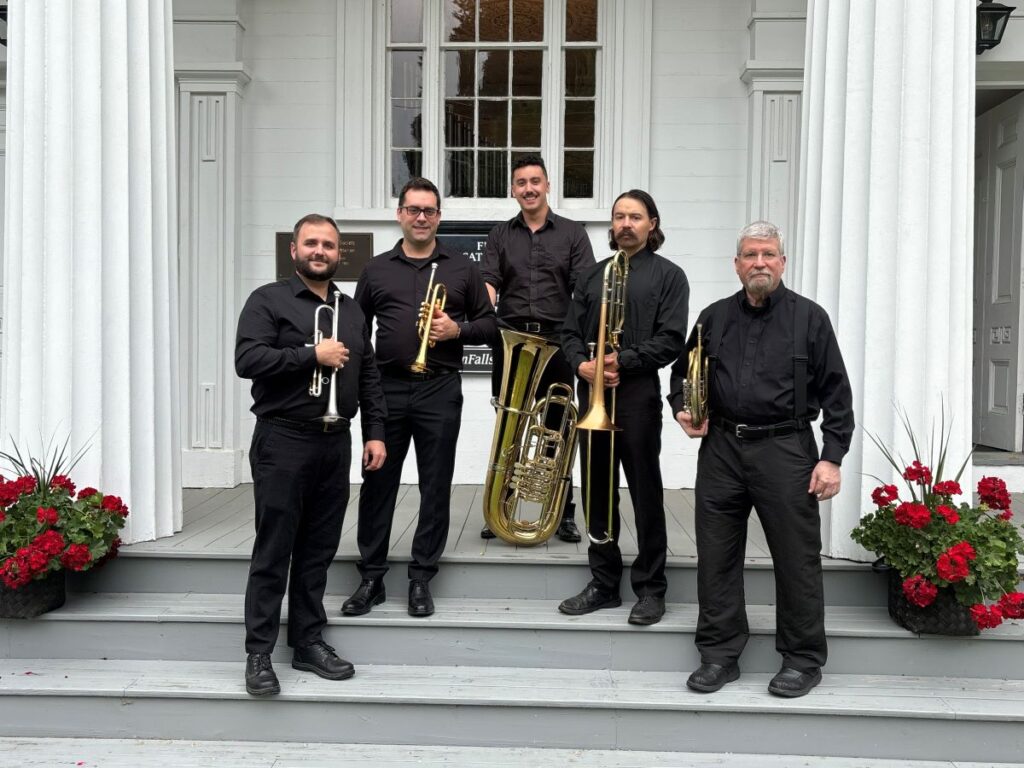
a note from the Portsmouth Brass Quintet

The program opens with Fanfare by Pulitzer Prize-winning composer Jennifer Higdon. This lively opener is filled with angular melodies and intense rhythmic drive. We stumbled upon this energetic work in a COVID-era release video from the American Brass Quintet (video shared below!) 

About 275 years prior to Higdon’s work is Bach’s monumental Art of the Fugue. This was one of Bach’s final compositions, written during the last decade of his life. It was unfinished at the time of his death yet still contained fourteen fugues and four canons. No instrumentation for the work was given, so brass players have jumped at the chance to add Bach’s fugues to their repertoire.  While not unfamiliar territory, perhaps hearing Contrapunctus IX played a brass quintet will be a new experience for you.

Jumping ahead to the Romantic era, the program will continue with another fugue. Clara Schumann was a German virtuoso pianist, composer, and educator. She had a 61-year career as a soloist where she championed her own music, alongside that of her husband, Robert Schumann, and her good friend Johannes Brahms. Prelude and Fugue comes from her opus 16, a set of three such forms. This work was not written for brass quintet but for the piano. Chris Coletti made the arrangement for brass. Listen to a bit of his performance of the work:

The next work is Victor Ewald’s Quintet No. 1 for Brass Instruments. Victor Ewald was a Russian composer who lived from 1860-1935 and his music is cherished by brass players worldwide. Despite being friends with several well-known composers like Alexander Borodin, Modest Mussorgsky, and Nicolai Rimsky-Korsakov, Ewald made his living as a civil engineer. Brass quintets around the world are eternally grateful for Ewald’s four prolific quintets, as we have far too little music from the romantic era.

The concert will continue with a work by the contemporary British composer, Grace Evangeline Mason. As Bronze is based on an unfinished poem by World War I era poet and solider, Wilfred Owen. The music represents the sad calm that comes after the end of a war, and ends abruptly just as the poem does. 

As Bronze May Be Much Beautified (Unfinished)
As bronze may be much beautified

By lying in the dark damp soil,

So men who fade in dust of warfare fade

Fairer, and sorrow blooms their soul.
Like pearls which noble women wear

And, tarnishing, awhile confide

Unto the old salt sea to feed,

Many return more lustrous than they were.
But what of them buried profound,

Buried where we can no more find.

Who ( )

Lie dark for ever under abysmal war?

Castle Crags in Northern California

Another contemporary work featured on the program will be Kevin McKee’s Escape. This was McKee’s first composition. He wrote Escape after attending the 2006 MMCK chamber music festival in Japan, where he had the opportunity to work with composer/trumpeter Anthony DiLorenzo. Written in an exciting, cinematic style, it depicts a rapid descent down Castle Crags amidst a violent storm.

Stephen Sondheim is undoubtedly one of the most influential voices in American Musical Theatre. His musical Pacific Overtures details the forced modernization of Japan by America, beginning in 1853. Written during America’s Bicentennial, the show celebrates its 50th year in 1976. It is very on brand for Sondheim to shine a light on America’s interference with another culture while most others were doing nothing but singing its praises. The song that you will hear is Someone in a Tree. Often cited as Sondheim’s favorite of his own songs, it tells of the signing of the “treaty” that forced Japan’s borders open. It is sung by a young boy who was hiding nearby in a tree, an older version of this boy, and a warrior hiding beneath the floorboards in the treaty house. In stitching together the details of the signing from multiple perspectives, Sondheim presents commentary on how history is remembered. You won’t get to hear any of Sondheim’s poetic lyrics in our performance, but we hope that you might find the tune enjoyable enough to seek out this rarely performed musical. You can listen to the original in the playlist below. 

The program will conclude with some toe-tapping early jazz from Thomas Wright “Fats” Waller. Ain’t Misbehavin’ was written in 1929 for a musical comedy called Connie’s Hot Chocolates. It is one of Waller’s best known tunes and was later used as the title for a musical revue tribute to him. This arrangement comes to us from Samuel Pilafian, the masterful tuba player of the Empire Brass Quintet. 

What You'll Hear